Sunday, October 24, 2010

Post 7: The Sitcom


Sitcoms function as a hyperbolic reflection of the anxieties and trends that exist within popular culture at a particular moment. SItcoms are dynamic in that each episode has a resolution and can stand on its own yet allows for character development and conflicts that roll over from episode to episode. The use of hyperbole and absurdity work to gain over all appeal and to democratize the content. Hyperbole is a smart means of creating mass appeal because of the entertainment guarantee that it supplies. The outlandish nature of sitcoms serve to democratize them as opposed to more subtle methods of communication that would only appeal to highly educated audiences.

"Friends" hyperbolizes the conflicts and celebrations of "everyday life" for twenty-something urbanites. The show is framed around an intimate relationship between two of the Friends, Ross and Rachel. Perhaps every reason that normal couples break-up and get back together is employed with a hollywoodized twist. But of course, in the end, love trumps all and ten seasons later they get married. However, the permanent plot and the episodic plot are loosely intertwined. Each episode seems to have its own climax and resolutions where the humor, not the underlying storyline, is the ultimate appeal.

Sunday, October 17, 2010

Punch Drunk Love


The opening shot in the film Punch Drunk Love gives us hints to the protagonists personality. Barry Egan played by Adam Sandler sits at his desk on the right side of the frame in an empty warehouse space. The shot is taken from about 30 feet back giving it a large depth of field. The shot reveals that Egan is neurotic, lonely and perhaps detached. The director was giving hints of his personality by focusing on the emptiness of the space. The drawn-out shot last for the first 45 seconds of the movie giving the audience plenty of time to decipher what exactly the director is trying to highlight and foreshadow based on the frame.


A second shot happens a few shots after the opening where a harmonium is dropped out of a racing truck on to the side of the street where Barry works. Though Barry is standing around 100 feet away, there is a shot of the harmonium from his perspective that slowly zooms in until the harpsichord is in playing distance. This foreshadows to the role that the instrument will play in the film and also attributes ominous and dark qualities to the harmonium because of the threatening way in which it is displayed. It's shot as if it were a scene from a western film where the slow zoom focuses on each cowboy as they draw their weapons, almost giving the harmonium human like qualities.


About 12 minutes in to the movie Barry goes to his sisters house for dinner and in an act of unprovoked rage he kicks down the sliding class doors as his family is sitting down to dinner. The shot is filmed from outside of the house with Barry's back to the audience and his sisters facing him. This framing is meant to make the viewer sympathize with Barry as he is attacked and ridiculed by his sisters while he stands there seemingly ignorant to what he has done. It demonstrates that his anger is random and unintentional. I like to call it a "monkey in the middle" shot where the protagonist is positioned halfway between the characters posing a threat and the camera giving a feeling of autonomy to the audience to make judgments about the characters.

Monday, October 11, 2010

Post 5


The studio system functioned like most industrial factories of the time. The demand was high given that film was the only form of mass media and most people went to see movies anywhere from 1 to six days a week. In order to produce low cost films quickly and efficiently the studio system operated like a factory. This assembly line method required that all parts of the production staff were present at all times so that the contracted actors and staff would be able to work on multiple projects at once. Movies were so popular that during WWII the theaters were opened 24 hours a day and served to keep moral high and diffuse information and propaganda. The studio system was essentially manufacturing movies with directors usually pumping out 3-5 movies per year. To further increase efficiency on the viewers end studios began to pick up "house styles" that matched them with a particular genre. Stars were also ironically linked to their studios and styles with films being refereed to as John Waynes' or Judy Garlands'.

Sunday, October 3, 2010

Post 4- All in the Family

Both All in the Family and the contemporary television show Modern Family provide a commentary on family life and structure. However, the "messages" portrayed in All in the Family appear to be implicit and leave "room for interoperation" that can allow for some viewers to see the irony in Archie's character while others relate to his antiquated bigotry.

Modern Family exposes and explains social issues such as gay marriage and teenage drinking in a more explicit manor to where the audience isn't as blind to the directors message. Both discus controversial topics and both usually align with the more egalitarian and rationalistic side of the issue. In a way, both of these shows function as intermediaries to the pubic in exposing controversial topics threw a medium that allows for the humanization of the issues.

For example, seeing the gay couple interact with their adopted vietnamese child might change public opinion about gay rights issues. Likewise for All in the Family when the "manly man" ex-NFL star is exposed as homosexual and Archie is surprised--maybe this could inform the public on the realities of homosexuality and that not everyone has to be the stereotypical gay "fairy" that Archie assumed.

The greatest difference between the shows is that Modern Family focuses on the idiosyncrasies of family matters in the 21st century such as divorce, inter-racial marriage, adoption, homosexuality, teenage rebellion, and the overall perfection of imperfection. All of these nuances are represented within the main cast and present reoccurring dialogs about these issues that allow for an in depth understanding of what it means to be a "modern family." Though i've had limited exposure to the show, All in the Family, seems to approach such themes in a more satirical way, where each episode focuses on the various perspectives of an issue as represented by each member of the nuclear family.

Here's an clip of the two men discussing what it's like to play a gay couple on the show. One of the actors jokes about himself being "gay for pay" because offscreen he is heterosexual.


Below is a sickening clip of that accuses Modern Family of being pro-homosexual propaganda. I wonder if the religious extremist would have had the same reaction to Archie's surprise gay friend, or if the irony would have been too difficult to decipher.

Sunday, September 26, 2010

Post 3- Radio in the 20's


Technological advancement was the main factor that contributed to the democratization of the radio industry in the 1920's because it's invention preceded its societal purpose--the technology came before the ideas that made it practical.

In other words, the radio wasn't invented in order to broadcast news or advertise products, rather news companies and prospective advertisers capitalized on this new technology to conveniently further their various agendas. Unlike the atomic bomb, the advent of the radio wasn't viewed as a pressing technology that didn't yet exist, it was just easily integrated into American life because of it's many uses. Technology works to drive society because it functions as a threshold that creates systematic change in relation to the way we communicate.

On page 161 of the text book, there is a line that says, in the 1920's "it did not take people long to figure out what to do with radio." The use of the phrase "figure out" in ascribed with particular importance. People like Frank Conrad, and stores like Westinghouse literally invented uses for this invention. Frank Conrad used is as a mediam to disseminate news which created a public demand to make the radio a house hold utility.

My father has worked the radio industry for over 30 years and has a radio show that is syndicated all over the country. Changes in technology continue to be the most influential factor in the way his show operates and makes money. This is a clip from an interview with Tim Allen in the 80's, that shows some of the more antiquated technology.


Sunday, September 19, 2010

Post 3 - Cultivation Theory


The cultivation theory explains how bias news stations reflect the general publics assumptions about political identity.

The Cultivation theory reveals that people develop their "realities" based on what is presented to them through media. If a particular subject is receiving substantial attention, such as criminal activity on nightly news, people tend to be hyper-aware of that subject. This can have a negative effect as it could lead to desensitization among populations, so viewers may start to see crime as something "inevitable" in it's prevalence. This could also result in populations that have an hypersensitive fixation with a subject, so viewers think that there chances of getting murdered are disproportionately inflated because of the amount of time homicides get on the news.

The same theory applies to news stations, as perceptions of what it means to be a republican or democrat are clearly outlined and presented through media. This theory is not only applicable to the way political parties side on a particular issues, but also to what is a "moderate" or "normal" stance within the party. If the general public were a refection of Fox news and MSNBC, for example, then the political body would be divided among the two most polarized ends of the political spectrum, when in reality the vast majority of people fall somewhere in between. This makes people more likely to a) align themselves with an issue based on their political allegiance, and b) feel pressured to choose between two, very clearly drawn-out options. This also leads people to believe that the general public is more polemic than in reality.

On Friday September 17, Jon Stewart announced his "Rally to Restore Sanity" in response to the current way the media limits the amount of acceptable representations of current events.

The following is the call to rally that is written in the white section of the above poster. It begin's with a highly relevant quotation from the film that presents a commentary on media entitled Network

"I'm mad as hell, and I'm not going to take it anymore!"

Who among us has not wanted to open their window and shout that at the top of their lungs?

Seriously, who?

Because we're looking for those people. We're looking for the people who think shouting is annoying, counterproductive, and terrible for your throat; who feel that the loudest voices shouldn't be the only ones that get heard; and who believe that the only time it's appropriate to draw a Hitler mustache on someone is when that person is actually Hitler. Or Charlie Chaplin in certain roles.

Are you one of those people? Excellent. Then we'd like you to join us in Washington, DC on October 30 -- a date of no significance whatsoever -- at the Daily Show's "Rally to Restore Sanity." Ours is a rally for the people who've been too busy to go to rallies, who actually have lives and families and jobs (or are looking for jobs) -- not so much the Silent Majority as the Busy Majority. If we had to sum up the political view of our participants in a single sentence... we couldn't. That's sort of the point.

Think of our event as Woodstock, but with the nudity and drugs replaced by respectful disagreement; the Million Man March, only a lot smaller, and a bit less of a sausage fest; or the Gathering of the Juggalos, but instead of throwing our feces at Tila Tequila, we'll be actively *not* throwing our feces at Tila Tequila. Join us in the shadow of the Washington Monument. And bring your indoor voice. Or don't. If you'd rather stay home, go to work, or drive your kids to soccer practice... Actually, please come anyway. Ask the sitter if she can stay a few extra hours, just this once. We'll make it worth your while.

Monday, September 13, 2010

Post 2 Hegemony


The myth of the "American Dream" continues to drive the societal assumptions that celebrate social mobility and merit-based achievement. In reality there is little evidence that supports this pervasive belief, yet it is overwhelmingly glorified by the media with films like "The Pursuit of Happiness" and the "rags to riches" rhymes from rappers like Jay-Z. The myth comes to life in our history books, in fact disempowering youth of color by exacerbating the idea that there are no real societal strains that are preventing minorities from climbing social ladders- that the people that live in their neighborhood are in fact responsible for the poverty and complacence that defines their culture. This assertion is disguised as an empowering and egalitarian idea and actually maintains the socioeconomic stratifications that prevent such mobility from coming to fruition. The myth of the American dream represents an example of hegemony, because it shows how media can create a consensus surrounding a particular issue that is perpetuated by a sentiment of "common sense."
Hegemony exemplifies the reciprocal relationship between media and society from the perspective of those with power. An idea that can be harnessed through logical fallacy can easily become accepted by the broader public. Through deception assumptions arise.

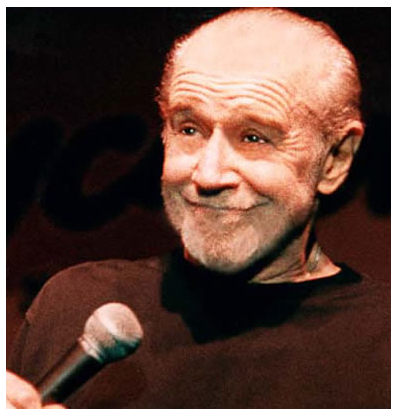
George Carlin puts it well in this clip. He ends it with "the American Dream is only possible when you're asleep."